Opening
The exhibition will be officially opened on Sunday 1 November at 2.30 pm with a performance by Muziektheater BOT. To attend the opening, please register via the button.
Register
On art and craft
What distinguishes an autonomous work of art from a handcrafted object? For a long time, the answer seemed self-evident: craft stood for skill, tradition and the handmade; art for ideas, concepts, autonomy and the individual expression of the artist. However, over recent decades this distinction has increasingly blurred, making it more difficult to draw a clear line between the two. Craft techniques are now firmly embedded in contemporary visual art. Not as a nostalgic return to a romanticised past, but as a means of exploring the world and telling stories about people and society.

Following the success of Craft Now! in 2023-2024, CODA Museum presents a second edition from 1 November 2026 to 11 April 2027. Bringing together the work of 25 artists from the Netherlands and abroad, the exhibition explores the significance of craft within contemporary visual art. For this second edition of Craft Now!, CODA collaborated with the AkzoNobel Art Foundation, which is celebrating its 30th anniversary in 2026 with presentations and exhibitions at various locations.
What happens when craft and technical knowledge are not subordinate to an idea, but help to shape both the thought process and the final result? What can a material reveal that a concept alone cannot? And what becomes visible when the making process itself is regarded as a form of research? Craft Now! focuses on the relationship between maker, material and method, demonstrating how craft is interwoven with the professional practice of visual artists. The artists in Craft Now! combine both craft knowledge, and skill with material research, experimentation, innovation and new techniques; themes explored range from current affairs to identity and heritage, sustainability and the relationship between people and society. The exhibition shows that craft is not a fixed category or genre, but an ever-evolving professional practice in which knowledge and imagination, hand and mind, tradition and experimentation come together.
The exhibition will be officially opened on Sunday 1 November at 2.30 pm with a performance by Muziektheater BOT. To attend the opening, please register via the button.
Register
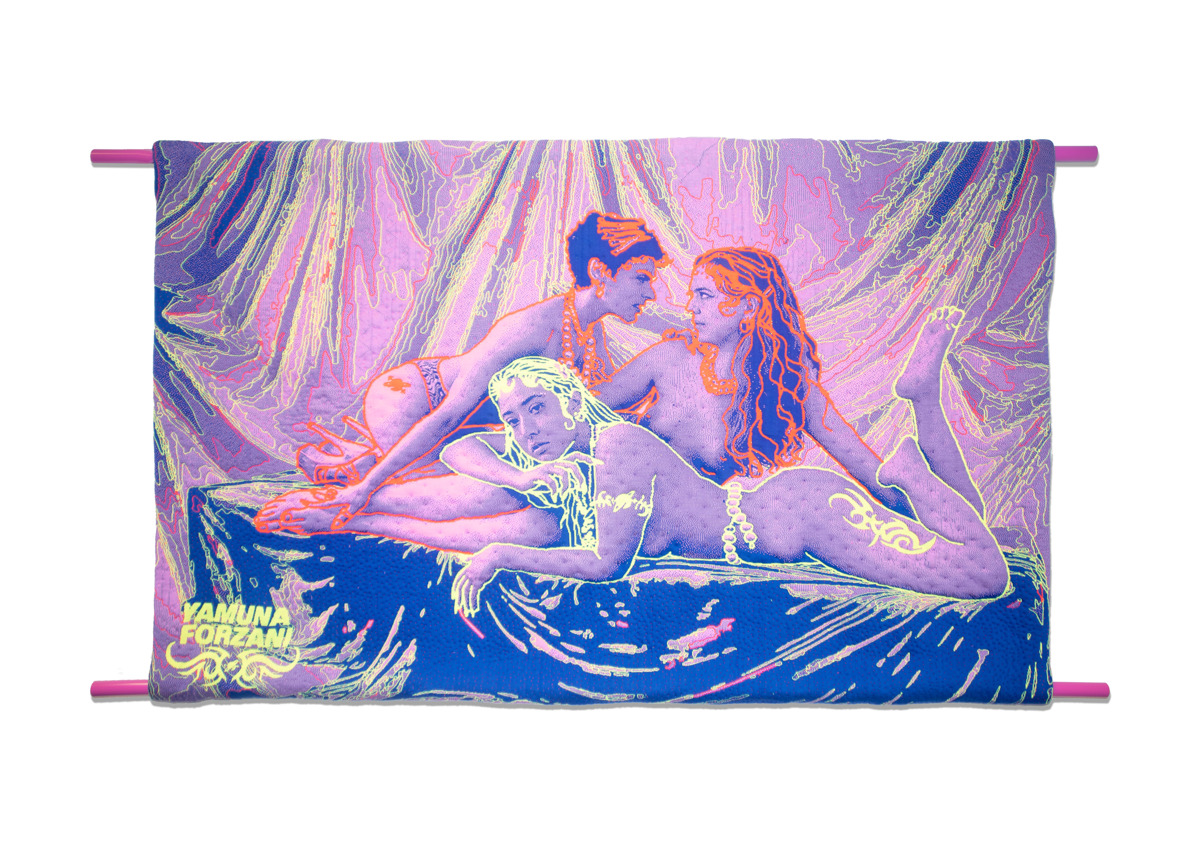
Visual artist and queer activist Yamuna Forzani (1993), for example, combines knitting and other techniques with questions of identity, emancipation, inclusion, and history. In the wall hanging Venus in Libra, she refers to classical representations of the female body and to ideals of beauty that have been shaped by male artists over the centuries. Forzani creates her own composition using people from the LGBTQIA+ community, photographs them, manipulates the image and then programmes it into a knitting machine. Beneath the seductive, soft and colourful abundance of Venus in Libra lies a fundamental question about representation and power. Libra, the scales, can also be read as a reference to balance or shifting of power dynamics. For Forzani, the knitting machine is far more than a tool for executing a design. Before making the work, she investigates what the machine is technically capable of, allowing its possibilities and limitations to influence the visual language of the work. Through her approach, Forzani not only transforms the representation of the body, but also the method and medium through which the body is represented.


.jpg?height=1200&width=1200&rmode=max&scale=both)
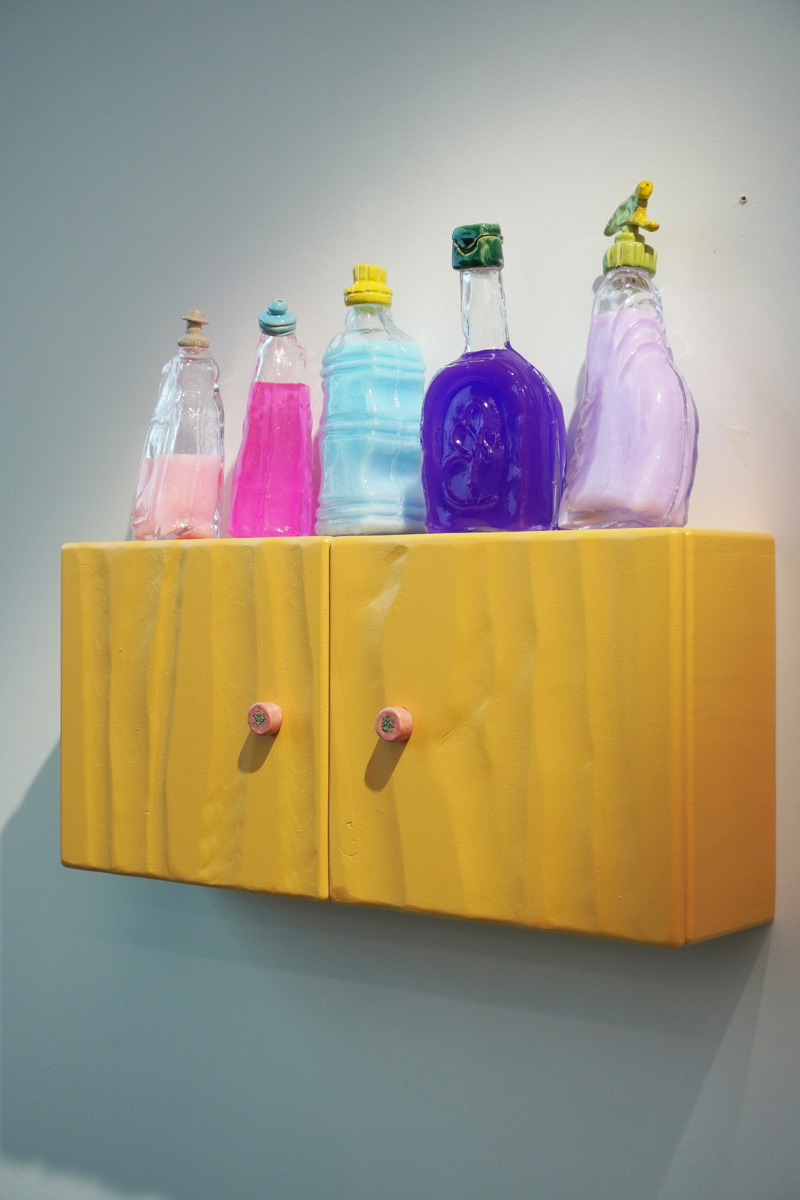
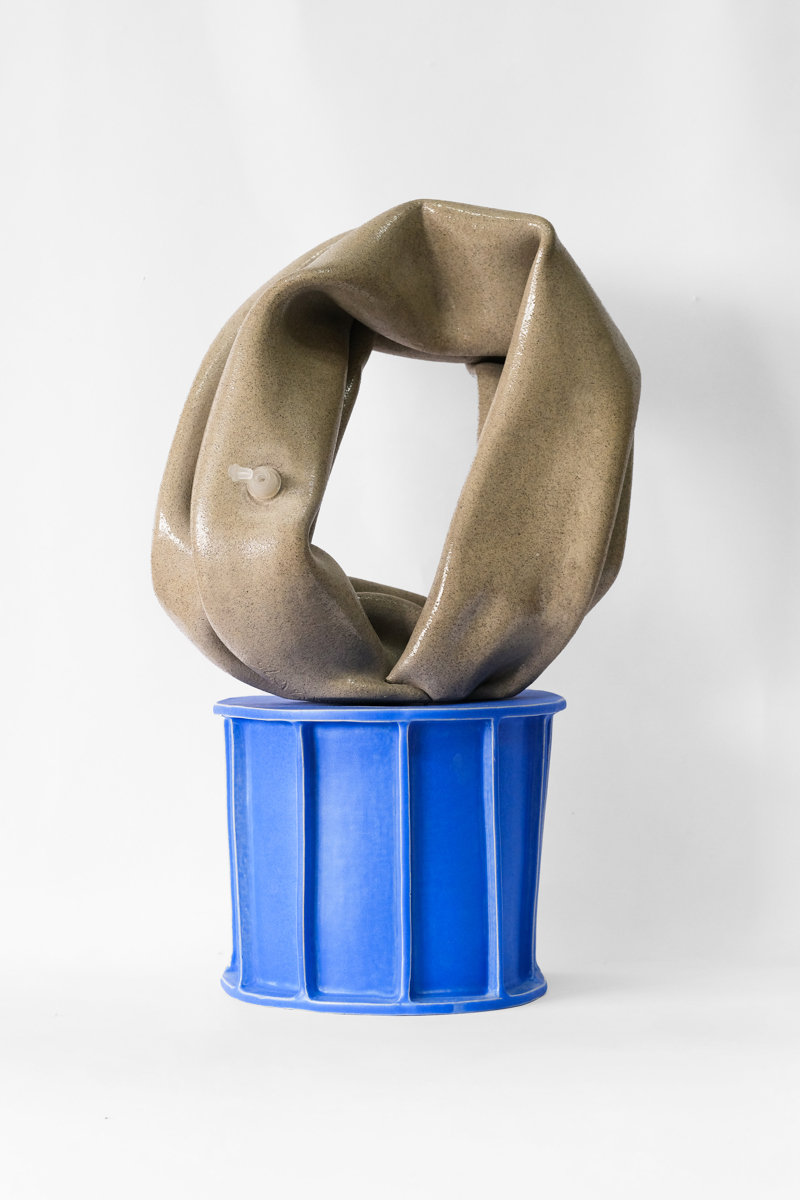
Artists such as Koos Buster (1991) and Anni Mertens (1995) take a very different approach to craft-based making processes. They regard craft as a field to investigate, bend and disrupt. The making process is not merely a means of realising an idea, but it becomes part of the research and experimentation. Buster recreates recognisable everyday objects – a bottle, water cooler, electrical socket or cleaning trolley – in ceramic and glass. The object remains recognisable, but its material, weight and meaning are transformed. Deliberately drawing on his technical knowledge of ceramic processes, Buster creates forms that are neither perfect nor industrial. Their lumpy, irregular surfaces make his engagement with the material visible. Mertens’ emphasis lies elsewhere. Her sculptures occupy a space between familiar objects and abstract forms. In her works, ceramic appears to bend, stretch, lean or be subjected to pressure. She plays explicitly with oppositions such as hard and soft, functional and sculptural, precision and improvisation. Her ceramic forms evoke other materials and suggest movement and elasticity, while in reality remaining hard and solid. Both artists use their craft knowledge and material research to introduce an element of uncertainty for the viewer.
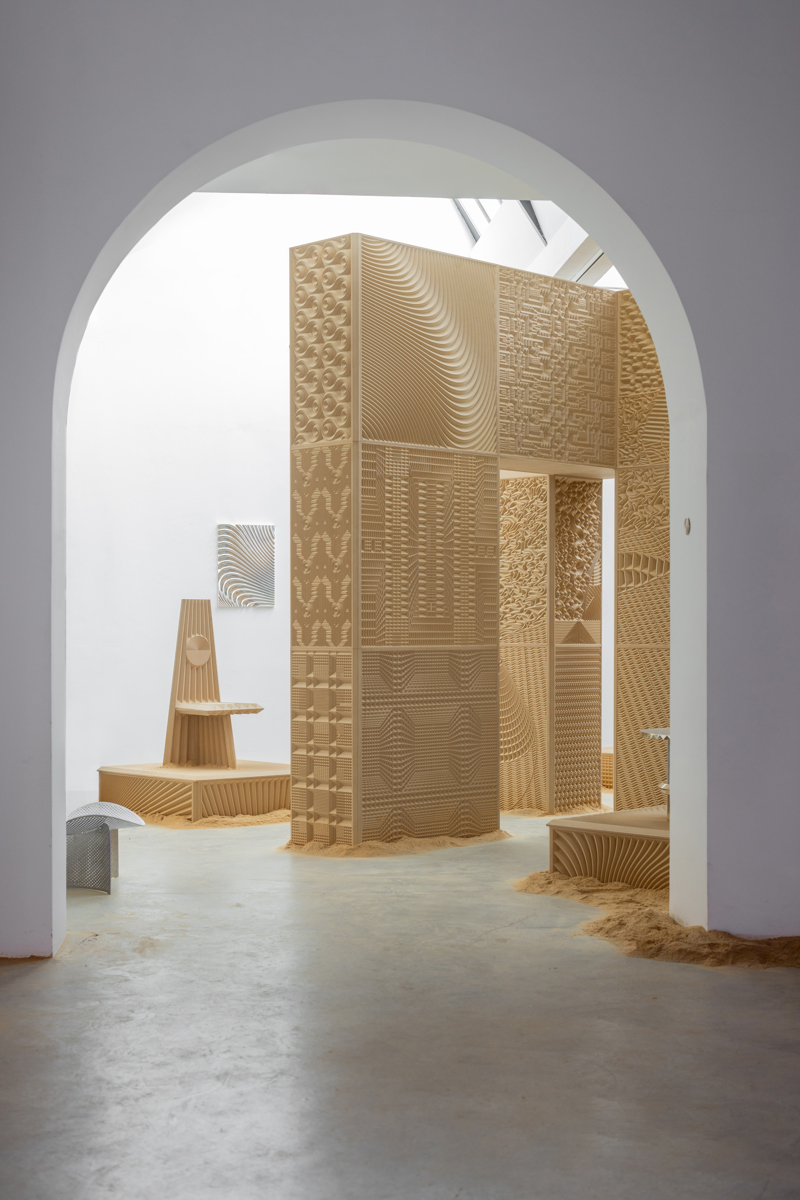
Arno Hoogland (1984), Éric Van Hove (1975) and Femmy Otten (1981) use different craft practices to investigate the possibilities of material, technique and production. For all three, craft is not an end in itself, but a means of discovering new forms, meanings and perspectives through the act of making. Hoogland draws on his background as a cabinetmaker and woodworker, combining traditional knowledge with digital techniques and innovative methods of production. Patterns, textures and constructions in his work take on either an organic or a distinctly futuristic appearance. His craftsmanship is not a nostalgic engagement with established traditions, but a starting point for explorations of form, material and space.
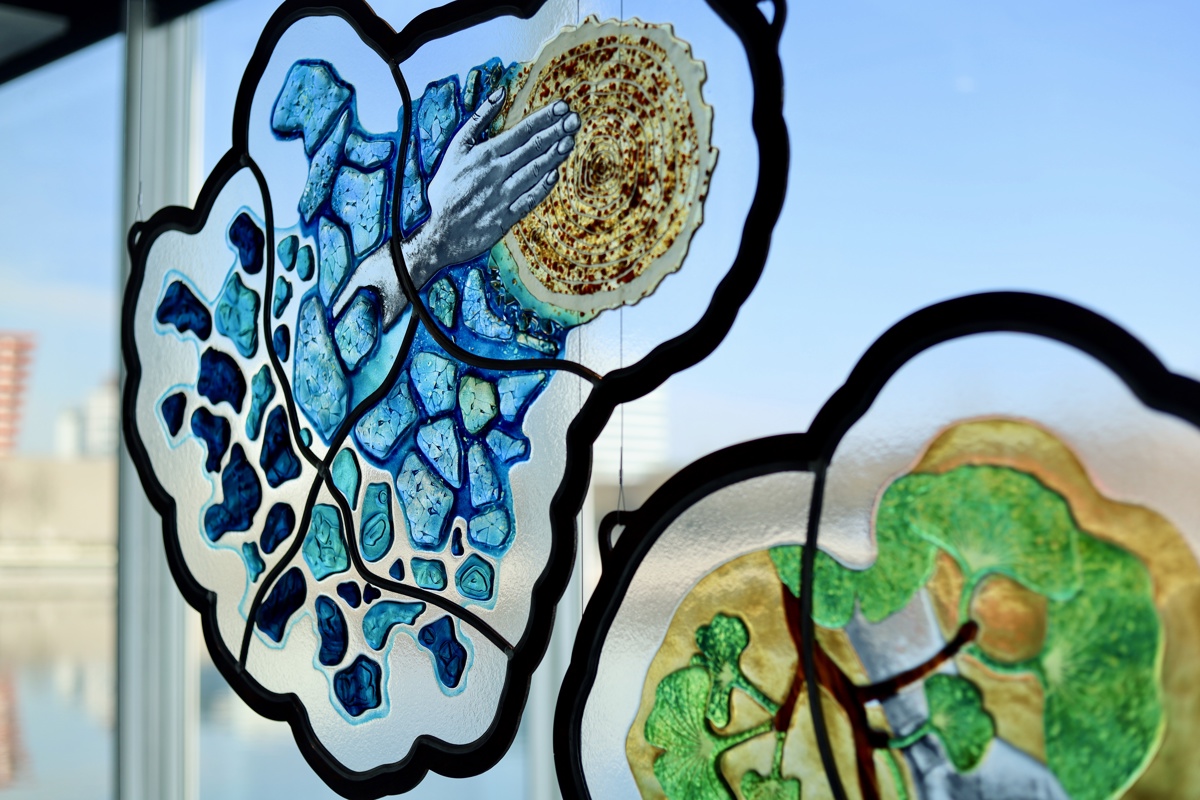
Van Hove likewise investigates what happens when craft and technology meet. Industrial and technically complex objects are reconstructed using local materials and the traditional techniques and expertise of Moroccan craftspeople. This not only makes visible the extent of knowledge and labour embedded in the making of an object, but also raises questions about globalisation and the position of craft knowledge within an industrialised economy. Otten approaches the relationship between material and making in a more direct and physical way. She creates her sculptures almost directly from the wood, discovering their form through the act of making: chopping, carving, observing, turning and starting again.
The artists in Craft Now! demonstrate the important role craft plays in the contemporary professional practice of visual artists. There is no longer an obvious distinction between craft and visual art, between handwork and concept, or between traditional knowledge and contemporary innovation. Making is therefore not simply the execution of an idea, but a way of thinking and investigating that helps to shape the work itself. It is within this continual interplay of knowledge, material, imagination and attainment, that a contemporary practice emerges in which craft and innovation come together as a matter of course.
Craft Now! is presented in collaboration with the AkzoNobel Art Foundation, which is celebrating its 30th anniversary in 2026. CODA was given the opportunity to borrow a number of works from the AkzoNobel Art Foundation collection for Craft Now!. CODA has complemented these loans with its own selection of works. As a platform, the AkzoNobel Art Foundation has been bringing contemporary art into motion for three decades through its dynamic international collecting policy, exhibitions at the public AkzoNobel Art Space and its generous museum lending programme.

Marlou Breuls, Koos Buster, Sigrid Calon, Chan Chiao Chun, Luna Cordaro, Koen Doodeman, Jonathan van Doornum, Afra Eisma, Arash Fakhim Esmaeilian, Ricardo van Eyk, Martin Fenne, Yamuna Forzani, Gijs Frieling, Emmy van de Grift, Bernard Heesen, Arno Hoogland, Éric van Hove, patricia kaersenhout, Fransje Killaars, Anni Mertens, Femmy Otten, Wouter van Riessen, Klaas Rommelaere, Carmen Schabracq, Ulla-Stina Wikander.
During Craft Now!, the CODA ExperienceLab Showroom presents the exhibition New Value: Rethinking Plastic Through Craft. Plastic has a negative image and is often associated with single-use or short-term consumption. Developed in collaboration with Crafts Council NL, this exhibition explores how plastic can be valued anew and approached differently. Various makers demonstrate the many ways in which plastic can be processed and reused. They show how traditional crafts and contemporary making methods can contribute to a reappraisal of plastic. The exhibition features works by BasketClub, a global community founded in 2020 by Adrianus Kundert and Jamie Wolfond. The BasketClub presentation includes baskets in which plastic is literally woven and interlaced: a traditional craft combined with a non-traditional material.